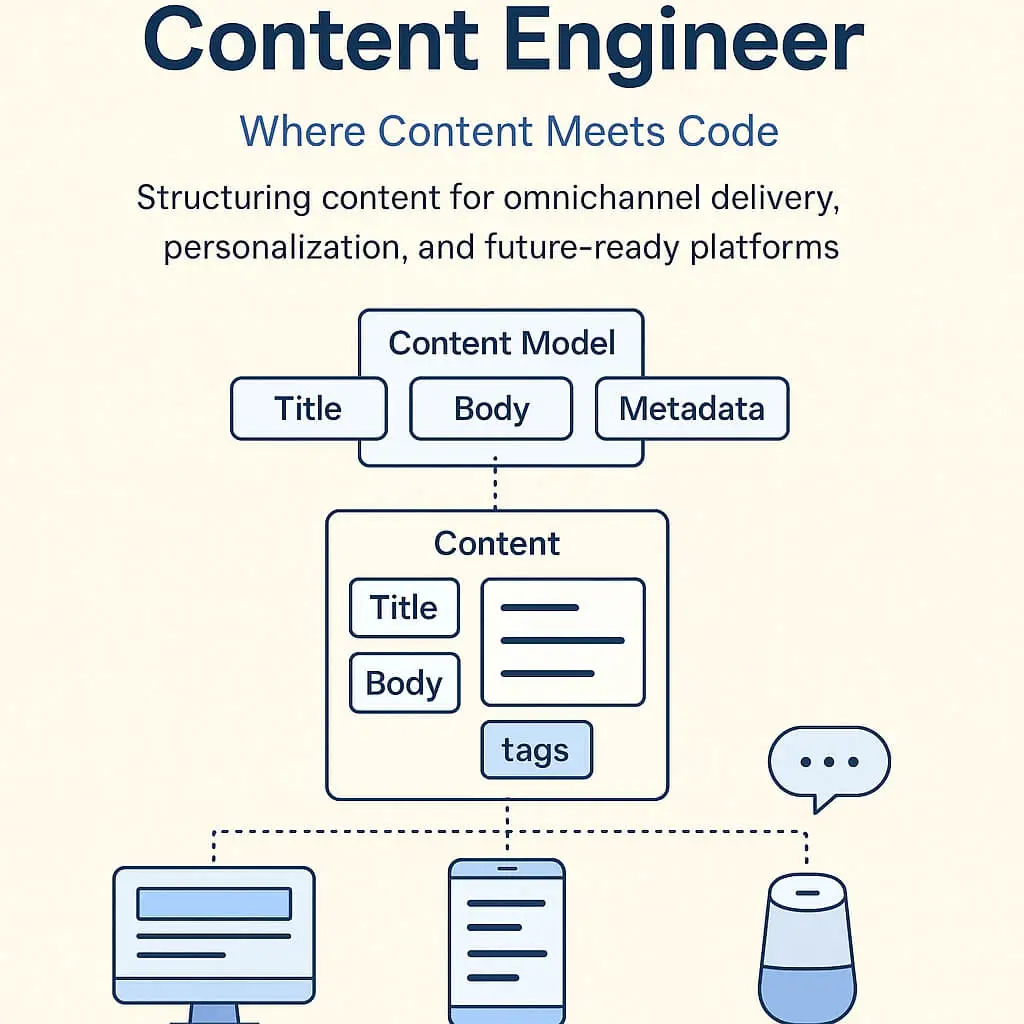
In today's digital ecosystem, content is more than just words on a webpage — it's a structured, intelligent asset that powers user experiences, automation, and personalization across platforms. Behind the scenes, Content Engineers play a critical role in designing, modeling, and optimizing this content so it can be reused, delivered, and understood across channels.
So, who exactly is a Content Engineer, what tools do they use, and how do they work?
What is a Content Engineer?
A Content Engineer sits at the intersection of content strategy, user experience, and technical infrastructure. Unlike content writers or copywriters, content engineers focus on structuring, tagging, modeling, and delivering content — not just writing it.
They ensure that content is:
- Reusable across platforms (web, mobile, apps, voice interfaces)
- Adaptable to different audiences and regions
- Structured in a way machines and humans can both understand
- Personalizable and ready for automation through AI/ML
Responsibilities of a Content Engineer
- Content modeling — defining types of content and their relationships (blog post, product page, FAQ).
- Content structure & schema — building schemas (JSON, XML) for consistency and adaptability.
- Metadata & taxonomy — designing tagging systems and metadata rules for better discovery.
- Tool & CMS integration — working with headless CMS tools and APIs to connect content with front-end apps.
- Collaboration — partnering with developers, UX designers, content strategists, and SEO specialists.
Tools Used by Content Engineers
A successful content engineer has a solid technical toolkit. Here are some of the most commonly used tools and platforms:
1. Content Management Systems (CMS)
- Headless CMSs: Contentful, Sanity, Strapi, Prismic
- Traditional CMSs (hybrid use): Drupal, WordPress (with REST APIs)
2. Schema and Modeling Tools
- JSON Schema, XML Schema, OpenAPI
- GraphQL for querying structured content
3. Version Control & Collaboration
- Git, GitHub, GitLab
- Jira, Confluence
4. Content Design and Prototyping
- Figma, Adobe XD
- Notion, Miro
5. Testing and Validation
- Content linting tools like Vale
- Accessibility testing: Axe, Lighthouse
6. APIs & Delivery
- RESTful APIs
- CDN integration (Cloudflare, Fastly)
- Static-site generators: Next.js, Gatsby
How Does a Content Engineer Write?
While Content Engineers aren't always writing customer-facing copy, they do write structured content, documentation, and metadata. Their writing needs to be:
- Modular — small pieces reusable across contexts (think LEGO blocks).
- Semantic — clearly labeled using tags or schema.org definitions.
- Accessible — optimized for screen readers, multilingual support, mobile usability.
- Optimized — structured for SEO with metadata and meaningful hierarchy.
Example:
{
  "title": "How to Brew Coffee",
  "author": "John Doe",
  "tags": ["coffee", "brewing", "tutorial"],
  "body": {
    "intro": "Brewing the perfect cup of coffee is both a science and an art.",
    "steps": [
      "Boil water to 96°C",
      "Grind beans to medium-coarse",
      "Pour over slowly",
      "Enjoy"
    ]
  }
}
Content Engineering vs. Content Strategy vs. UX Writing
They all work together, but content engineers are the bridge between content and code.
Why Are Content Engineers So Important?
- Omnichannel delivery — content works across web, mobile, smart speakers, chatbots.
- Scalability — structured content is easier to translate, personalize, and scale.
- AI-readiness — AI tools depend on clean, structured, semantic content.
- Faster time-to-market — well-modeled content enables agile development and reduces redundancies.
Final Thoughts
In a world of ever-evolving digital channels, Content Engineers are the unsung heroes enabling consistency, efficiency, and innovation. Their work helps organizations deliver the right message, to the right person, at the right time — regardless of platform.
If you're building a digital product, launching a multi-language site, or integrating with AI tools, don't overlook the power of content engineering. It's not just about what you say — it's about how well you've structured it to be said everywhere.